
BWPA 15 Judge Spotlight: Gina Goodman
With entries for the 15th British Wildlife Photography Awards now closed and judging underway, we went behind the scenes with this year’s judging panel to find out more about their passion for nature photography and what led them to where they are today.
Read on to discover more about underwater photographer and lecturer Gina Goodman - including her top tips for entering the competition!
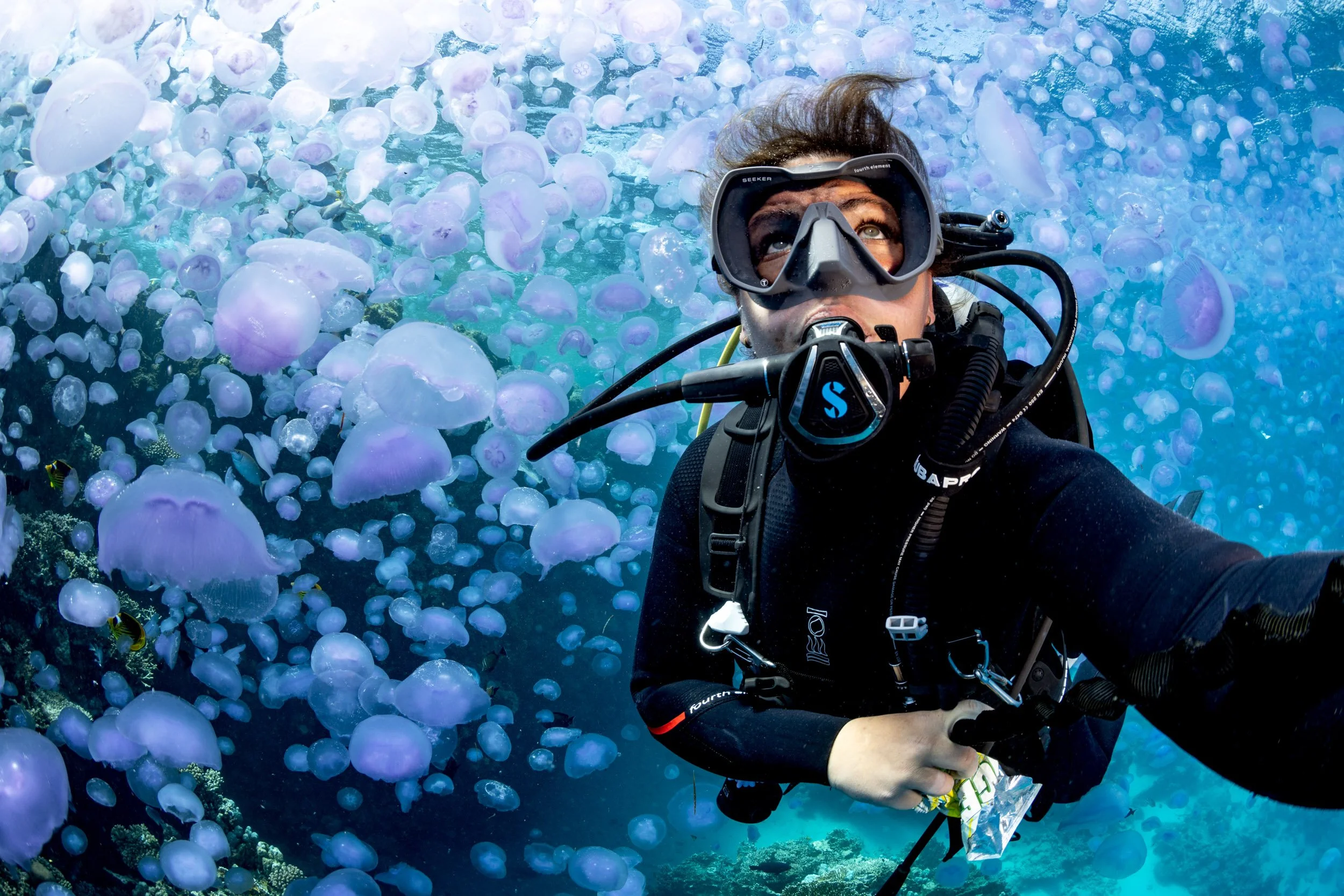
What inspired you to take up nature photography, why did you choose to make it your career and what do you love most about it?
Well, if I’m honest, I don’t know that wildlife photography was always my ultimate career goal, mainly because it didn’t feel attainable when I was young and considering my career pathways. What I did know was that I always had a great affinity for wild spaces, the wildest and most fascinating of all in my experience being the ocean.
A few experiences in my youth, both good and bad, inextricably tethered me to the water, and I fell into a career as a diving instructor. Whilst I don’t really teach diving anymore, the education side of that path made it clear to me that I was driven to make this environment more widely understood and accessible in whatever capacity I could.
I was fortunate to find the Marine and Natural History Photography degree at Falmouth University when I was considering my higher education options, and I knew quite quickly that the course was where I belonged. I spent a lot of time developing my understanding of underwater photographic practice and accessible teaching approaches, with the aim of one day joining the course team, which I achieved in 2019.
There are many aspects of my job I love, not least having dedicated time to continue my own photographic practice, but my greatest joy is working with deeply passionate young people. Their enthusiasm and optimism is nothing short of contagious and, in times of concern for our environment, it is a very hopeful place to develop a career.
Tell us about a highlight and a lowlight of your career
I have several highlights. I’m fortunate that they happen frequently, and it always comes back to seeing our graduates succeed as ocean advocates. Whether that’s as ambassadors for the environment or as photographers and filmmakers deepening public understanding.
A personal highlight is that my career has enabled me to spend the last 15 years immersed in our local waters around Falmouth, Cornwall, learning to read the ebb and flow of its wildlife and weather. I have experienced how diverse, magical and surprising our cold-water habitats can be, day to day and year to year. It is a real privilege to know a habitat that intimately.
Conversely, I have also seen how we fail to adequately care for these spaces, and how our inability to address key issues, even with sustained effort, such as sewage dumping, can impact the natural rhythms of coastal communities, human and animal alike.
BWPA 15 is now closed for entries.
View last year’s winners in our gallery
If you could go back to when you were just starting out, what advice would you give yourself?
To trust in myself and my experiences a little bit more. I think it’s far too easy to fall into the trap of thinking “someone else can and will do it better”. It’s important to realise that there is no better or worse, just different. We all have vastly different perceptions and experiences of the same places, and having that diversity of experience driving our creative voices in wildlife industries is what keeps our conversations about the future of our natural world evolving. We all need to be talking about our environment, every single one of us.
What is your favourite British species, landscape or habitat to photograph and why?
Well, I’m evidently biased here! It will be no surprise to learn that my favourite habitat to photograph in is the ocean. Whilst I have had many magnificent ocean experiences, from diving with dolphins and mantas to snorkelling with seals and sharks, I am generally drawn to species that others often struggle to connect with. Surprising for some, less so for others, my favourite species to photograph are jellyfish.
I think jellyfish are sorely misunderstood and underappreciated. I often overhear conversations about how much of a pest they are when they close beaches, how dangerous their stings can be, and how fearful people are of encountering them. Undoubtedly, some species can be harmful to humans, but they are a group with a history, and a future, that we should be paying attention to.
We are beginning to understand that jellyfish can act as indicators of global ocean health, and we appear to be seeing more of them, and their immense smacks, year upon year. Not because jellyfish are villains taking over a healthy ocean, but because we have altered the ocean in ways that suit them. Nutrient-rich, low-oxygen, and warming waters, driven by sewage, runoff, overfishing and climate change, create exactly the kind of stressed habitats in which jellyfish thrive.
© Gina Goodman
Show us your favourite photo that you have ever taken - why is it your favourite and what is the story behind it?
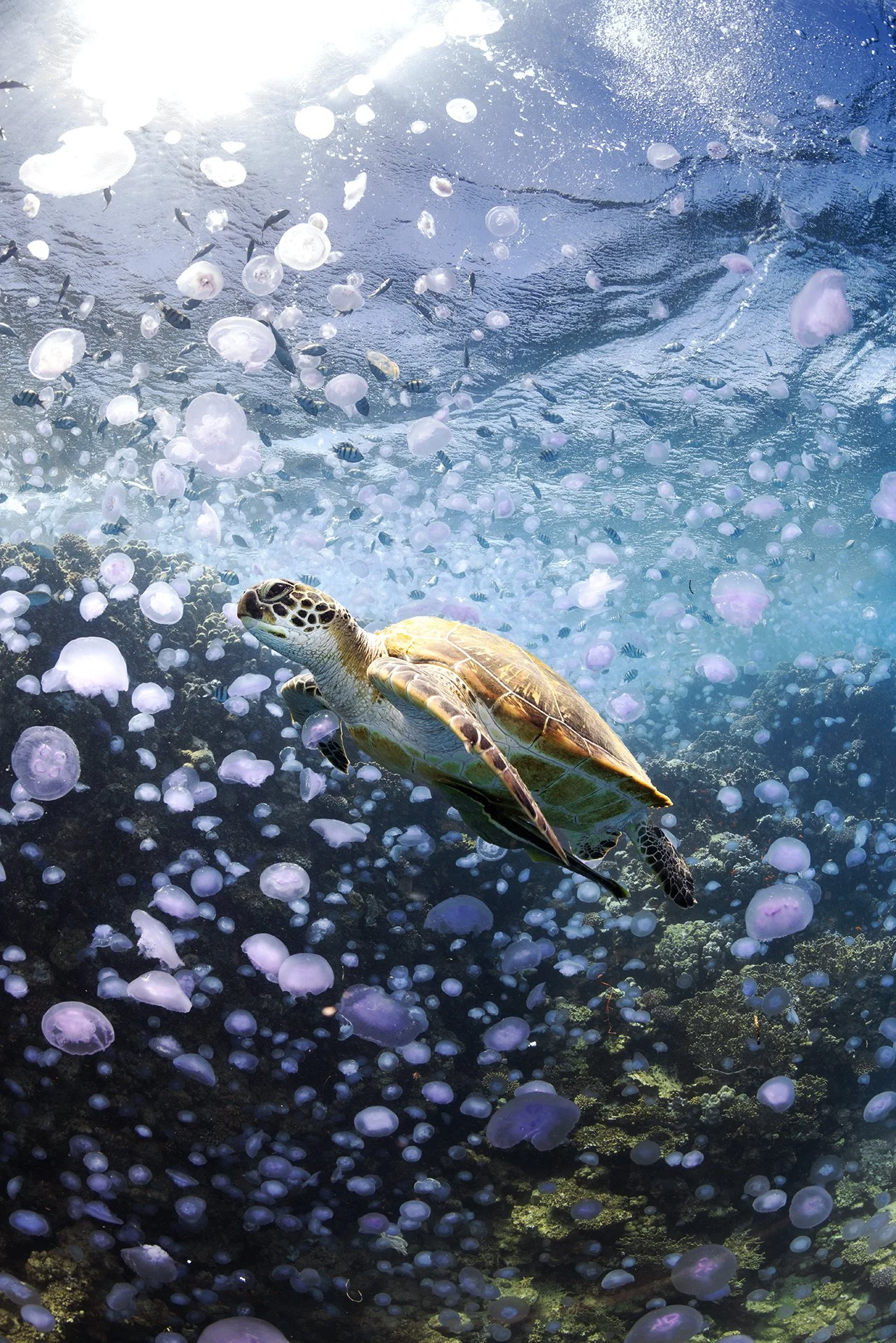
My favourite image I have ever taken is, perhaps unsurprisingly, of jellyfish. Whilst my portfolio is full of all manner of gelatinous wonders, this particular image stands out for many reasons.
Whilst diving in Marsa Alam, Egypt, I was fortunate enough to encounter a dense “smack” of moon jellyfish. The pink cloud had been corralled into a small cut-out of reef and was an utterly overwhelming phenomenon to experience, with jellies occupying nearly every square inch of the water column from substrate to surface. The gathering was so dense it blocked out most of the sunlight within the inlet, making underwater photography even more challenging than usual.
Of the thousands of images I shot that day, this one stood out not just because of the spectacle of the smack itself, nor the wonder of seeing turtles following the cloud to feed, but because of how the entire reef had, in a matter of hours, been transformed into something utterly alien. Coral heads I could navigate with ease the day prior had become impossible to read. Some shyer species of fish blossomed into opportunistic predators, whilst others fled to the safety of the corals, completely thrown by the sudden change in their environment.
This image takes me straight back into the smack and that feeling of being overwhelmed, in total awe of nature, its unpredictability and its beauty.
© Gina Goodman
What is the most challenging shot you have ever captured - and why?
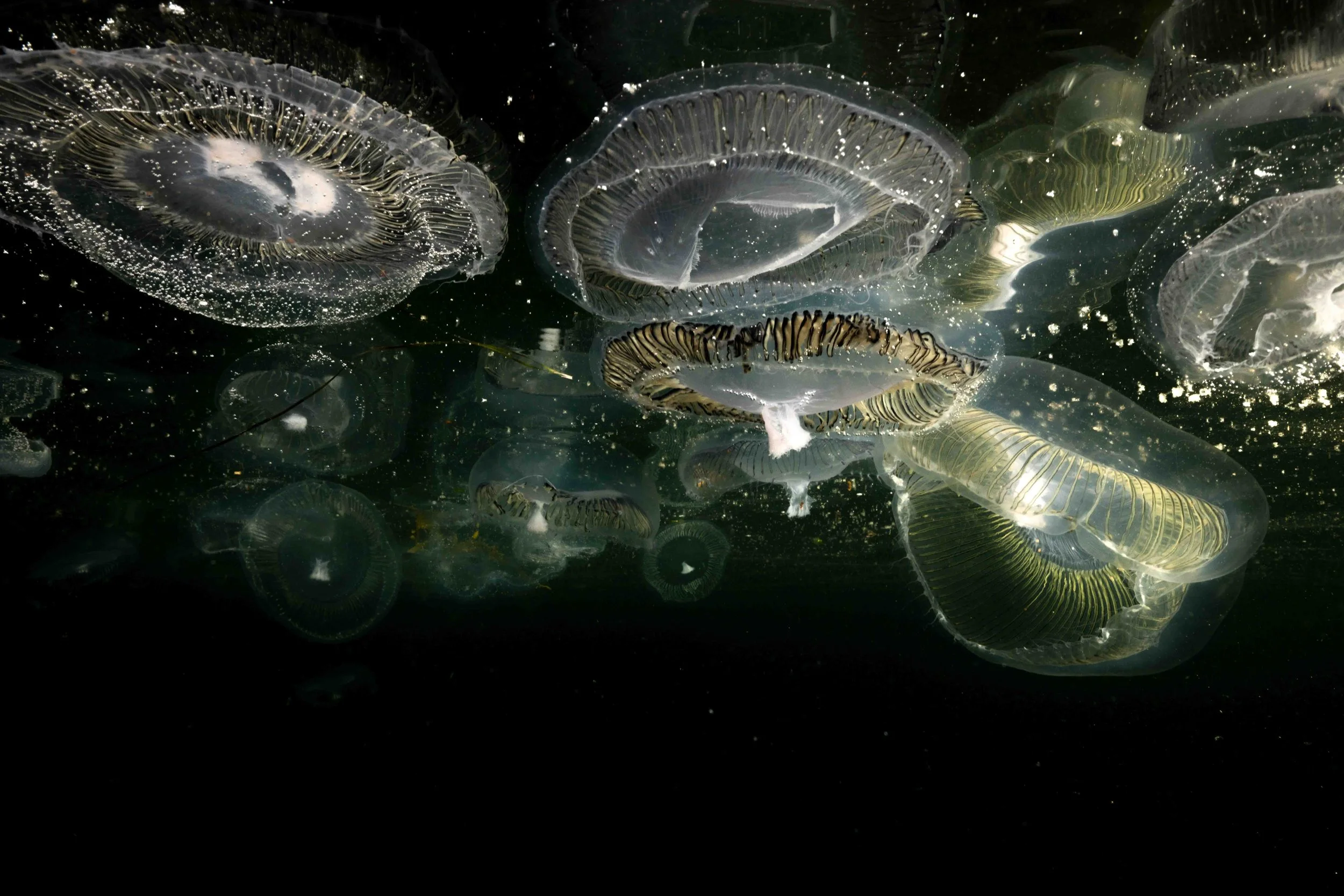
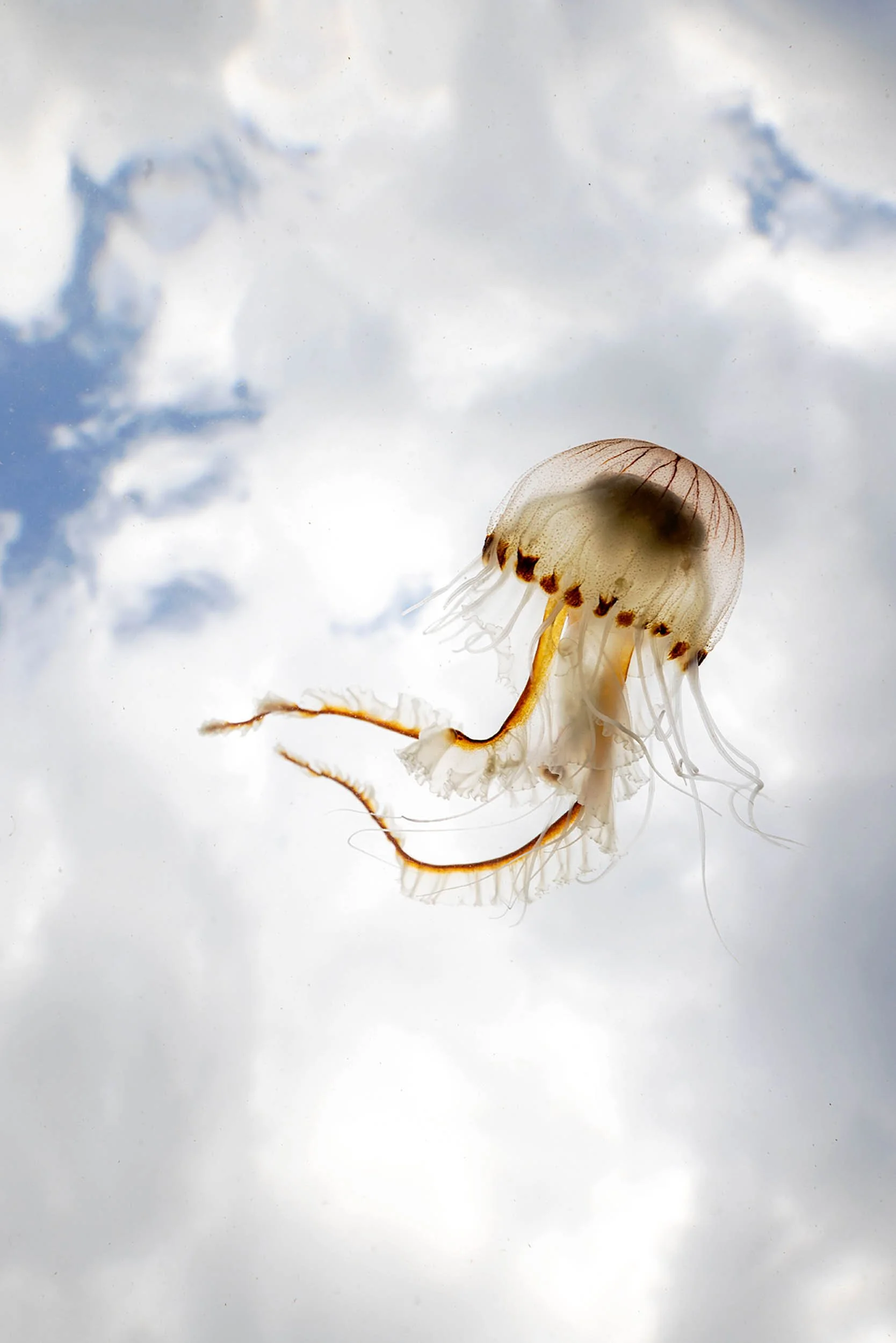
In continuing the theme, we again have jellyfish, but this time on my home turf in Cornwall. I don’t just love them because of what they can tell us about our environment or how mesmerising they are to watch in the water, I also love them because, as an underwater photographer, they give me opportunities to experiment and play with light. Whilst no wild subject is ever truly compliant, jellyfish are among the more forgiving.
Many encounters we have, particularly underwater, are fleeting. We are entirely out of our comfort (habitable) zone in the ocean, so time with a subject is often limited, whether because we need to return to land or the subject simply moves on. Jellyfish drift with currents and tides at a slow, predictable pace. They are a bit of a photographer’s dream really, allowing time to think, experiment and play. That’s exactly what happened here.
I adore wide angle photography underwater and, for better or worse, I can’t be convinced to remove this lens from my setup, even in conditions most would consider unsuitable for the discipline, like thick algal blooms. Such was the case on this day.
After searching up and down the coastline for the best part of an hour, I eventually found a couple of small compass jellyfish and started trying to tune my lighting. Whether it was due to the water conditions or a technical issue, I’m still not sure, but I couldn’t quite get the light from my strobes to fall naturally.
I turned my camera around to take a selfie, a great way to assess lighting as you can see the strobes firing and check your skin tone, and as I did, I accidentally took a photograph towards the surface, partially framing a jellyfish. Looking back at the LCD screen, I saw how the jelly had fallen into Snell’s window, a phenomenon where, underwater, the surface appears as a clear porthole to the sky, and immediately saw the potential.
Most photographs I had seen using Snell’s window framed the edges of the porthole, but because I was using a rectilinear lens rather than a fisheye, I was able to zoom in on the subject and crop the frame, creating the illusion of a jellyfish in the clouds.
It took a little while to position my lights so they wouldn’t reflect off the surface, which I tested without a subject in frame, and a few retakes between the wind rippling the water, but after an hour or so, I found the right combination to create the effect I was after.
© Gina Goodman
Which BWPA category is your favourite and why?
I strive to be nothing if not predictable! It’s Coast and Marine.
I adore seeing all manner of diversity and creativity across all the categories, but our coast and marine environments to me are the epitome of magic. If I could only ever dive in one environment for the rest of my life it would be UK waters.
Unlike coral reefs that change and build slowly over time, cold water habitats that are filled with marine flora can change daily, weekly, seasonally. We can move from lush bright spring seas with fresh green kelp and red dulses to metallic blue waters and earthen tones in cold winters, and just when we think we know what to expect in terms of subjects, we can always be surprised.
One year it can be hard to swim 10 feet without encountering vast schools of mackerel and bass, other years nudibranch and sea hares smother the rocky reefs and octopus communities boom. We try our best to sleuth out what each year might hold, but we never really know until we are out there, in the ocean, watching and trying our best to understand the blue world around us.
You can see the full list of BWPA Categories here.
What are your top tips and advice to entrants - how can they make their images stand out?
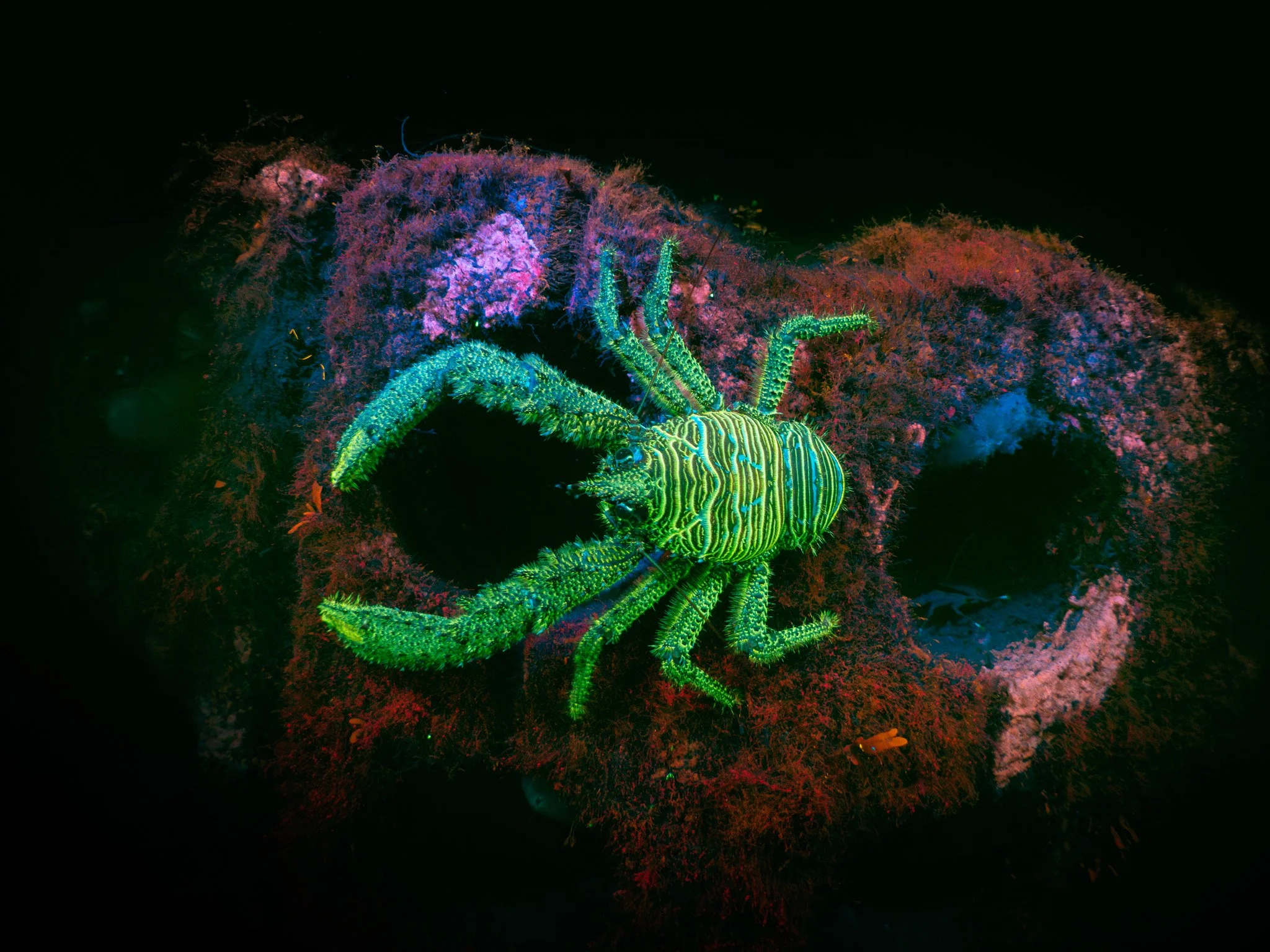
I’d like to present entrants with the same challenge I present to my students. I want you to make me reconsider a subject that perhaps we take for granted in our beautiful isles, with light and understanding. There are more stories and opportunities than we can possibly imagine right on our own doorsteps, from shrimps that self-oxygenate stagnating rock pools to scallops with a soft spot for disco.
I’d love to see something I have seen a thousand times previously, in a way I have never seen it before. Whether that’s crafting an image through considered technical practice, sculpting with light or finding a unique opportunity through understanding. I have always found the most impactful images didn’t begin behind the lens; they began in a book or from observation. Understanding your subject and its environment gives you control behind the lens, and more time to focus on creativity whilst you anticipate an opportunity.
Gina will be joining our other wonderful judges on the panel for the 15th British Wildlife Photography Awards.
Entries for this year’s competition are now closed and judging is underway!
Updates will be shared on our socials and in our newsletter.
